logo logo

Rover Research – The first regenerated tire in the world

Reading Time: 8 minutes

A New Industrial Process to Improve Performance, Sustainability, and Efficiency

For decades, tire retreading has been a strategic solution for the heavy-duty transport sector: it extends the life of tire casings, reduces operating costs, and minimizes environmental impact.

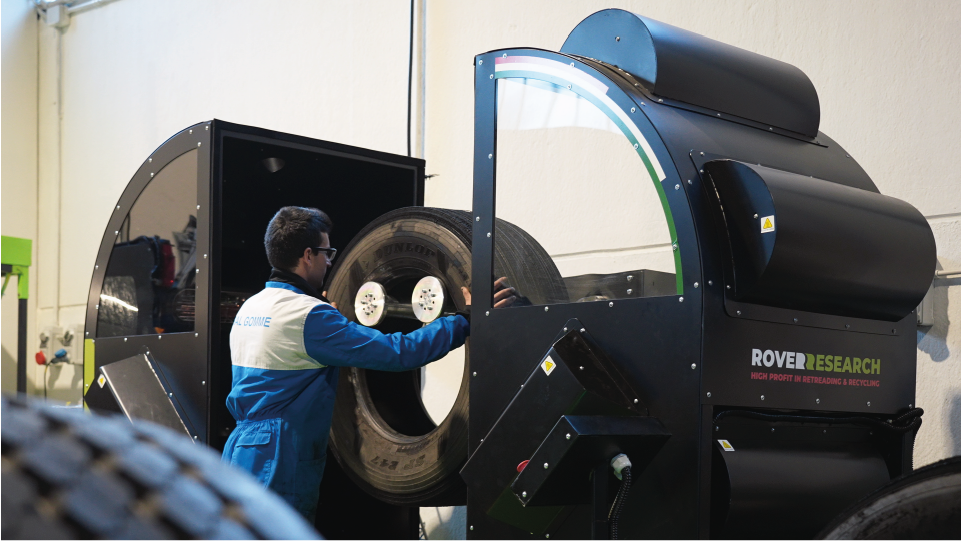
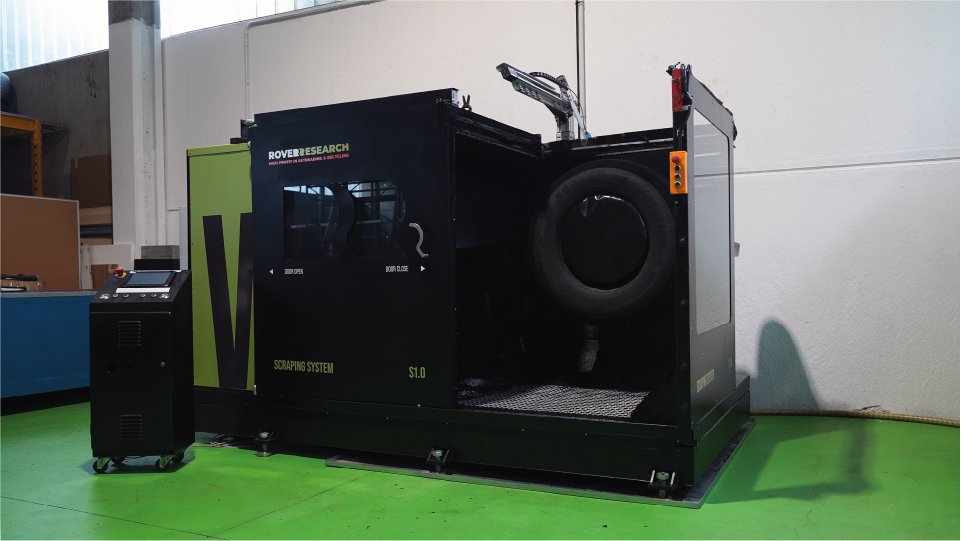
At Sos Tyres International, we are always interested in new technologies in the tire industry, so we visited a facility that has developed a new retreading process capable of directly altering the molecular structure of the rubber, drastically reducing waste, energy consumption, and the amount of material used.

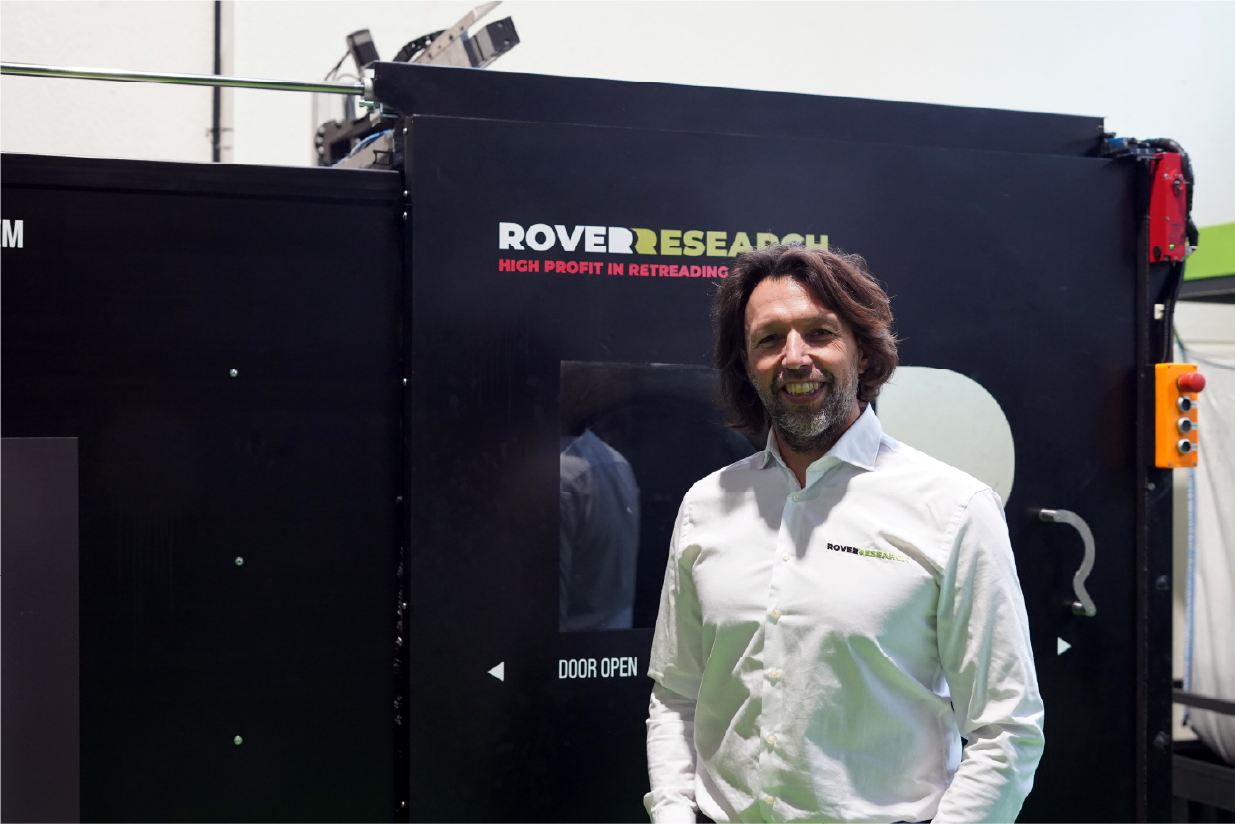
During the visit, we interviewed the engineer in charge of the project, who guided us through the various production processes: from traditional methods to the new technology developed by the company.
Traditional Retreading Processes


Francesco:
To understand the innovation you’ve developed, let’s start with traditional processes. How does tire retreading work today?

Engineer Silvio Mennella:
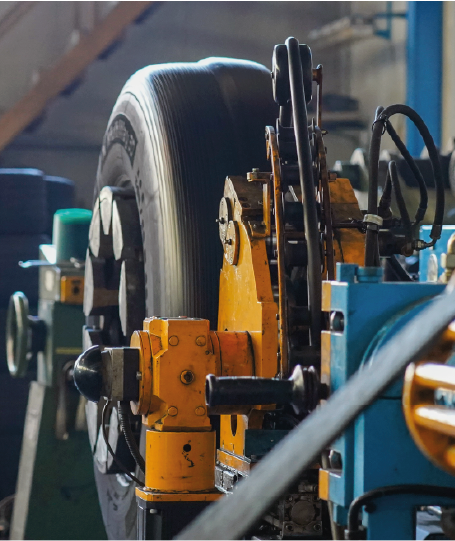
There are two main traditional retreading processes: cold retreading and hot retreading. Both share an initial step: casing scraping.

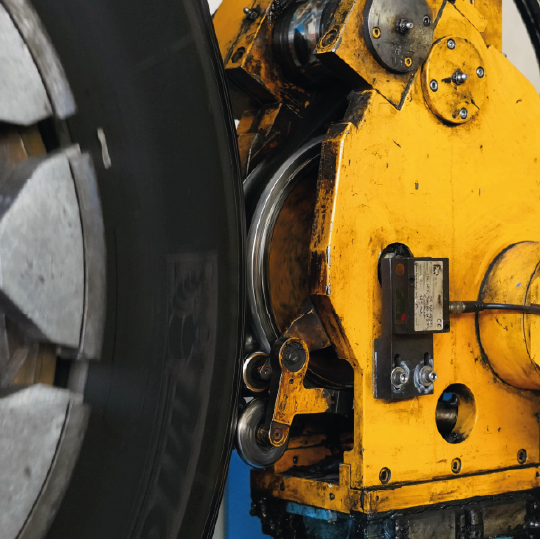
This operation involves completely removing the worn tread and part of the underlying layer, down to about 1–2 millimeters from the carcass’s steel belts.

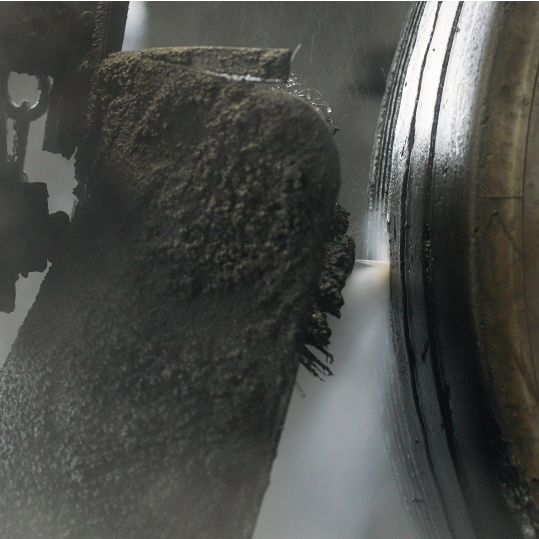
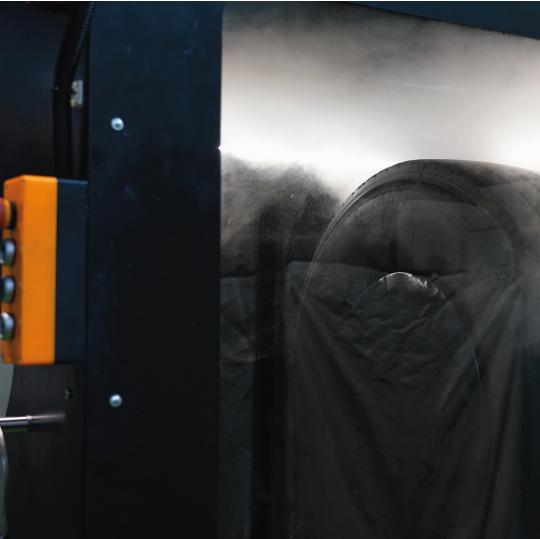
The stripping is performed using rotating metal blades that cut through the rubber. During this process, a great deal of heat builds up at the point of contact and smoke is generated, because the rubber reaches high temperatures and can undergo partial combustion.

The removed material becomes rubber scrap, which must be managed as industrial waste. It is not easily reusable in the production process.

Cold Retreading

Francesco:
How does cold retreading work?

Engineer Silvio Mennella:
After the casing is scraped, a special adhesive is applied to it. Next, a pre-molded tread is applied—that is, one that has already been vulcanized and features the final tread pattern.

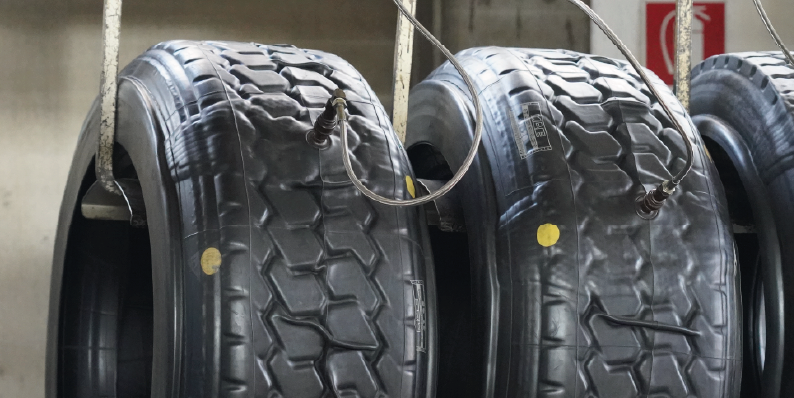
The tread is wrapped around the casing, and the tire is placed in a vacuum chamber or autoclave, where the adhesive vulcanizes, bonding the two components together.

It is called “cold” retreading because the tread is already vulcanized, so the heat is mainly used to activate the adhesive that creates the bond between the two parts.

This system requires a stock of pre-molded treads, each with different patterns.

Hot Retreading

Francesco:
So how does hot retreading work?

Engineer Silvio Mennella:
The hot process is more complex but also more similar to the production of a new tire.

After the casing is scraped, an extruder is used—a machine that melts the unvulcanized rubber and deposits it directly onto the casing.

In practice:

the raw rubber enters the extruder
a screw melts it and pushes it toward the outlet
the material is applied to the carcass, forming a uniform layer

At this point, the tire is placed in a segmented mold, which closes and imprints the tread pattern.

The whole assembly remains in the mold for about an hour and a half at approximately 120°C, the temperature required for the vulcanization process, which transforms the rubber from a plastic material into an elastic one.

Rubber Before and After Vulcanization

Francesco:
What is the difference between rubber before and after vulcanization?

Engineer Silvio Mennella:
The difference is enormous.

Unvulcanized rubber is a plastic, malleable material, similar to modeling clay: if you shape it, it retains its new form.

After vulcanization, however, it becomes elastic. This process creates chemical bonds between the rubber molecules through sulfur, which imparts elasticity and mechanical strength.

Differences from Traditional Methods

Francesco:
What is the main difference from traditional methods?

Engineer Silvio Mennella:
The main drawback is that scraping removes a large amount of material that is still perfectly usable.

When you get close to the carcass plies, a lot of structurally sound rubber is removed. In practice, this breaks down the carcass, only to add large amounts of material back on top.

Furthermore:

rubber waste is generated that must be disposed of
energy is consumed for scraping and vulcanization
a lot of new rubber is used

The new process developed by Rover Research

Francesco:
Let’s now talk about your innovative process. What is the main difference?

Engineer Silvio Mennella:
The fundamental difference is that we do not destroy the original structure of the tire casing.

In traditional methods, almost the entire tread is removed down to the plies. In our process, however, we remove only the bare minimum, preserving most of the original rubber.

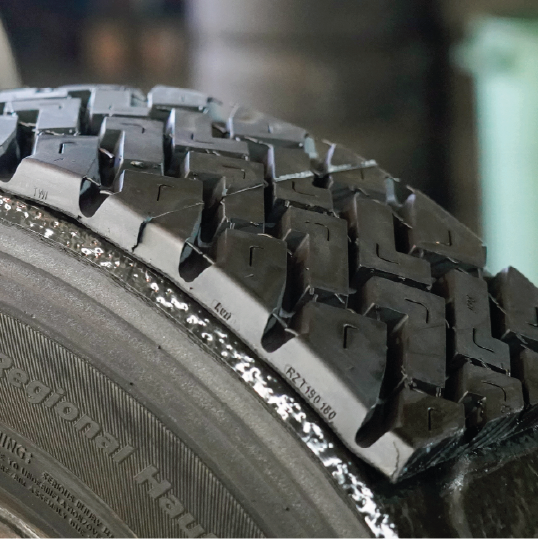
In many cases, you can still see the original tread pattern because we remove only a few millimeters.

This means we recover most of the original carcass structure, drastically reducing waste.

Controlled Devulcanization

Francesco:
What is the underlying technological principle of this process?

Engineer Silvio Mennella:
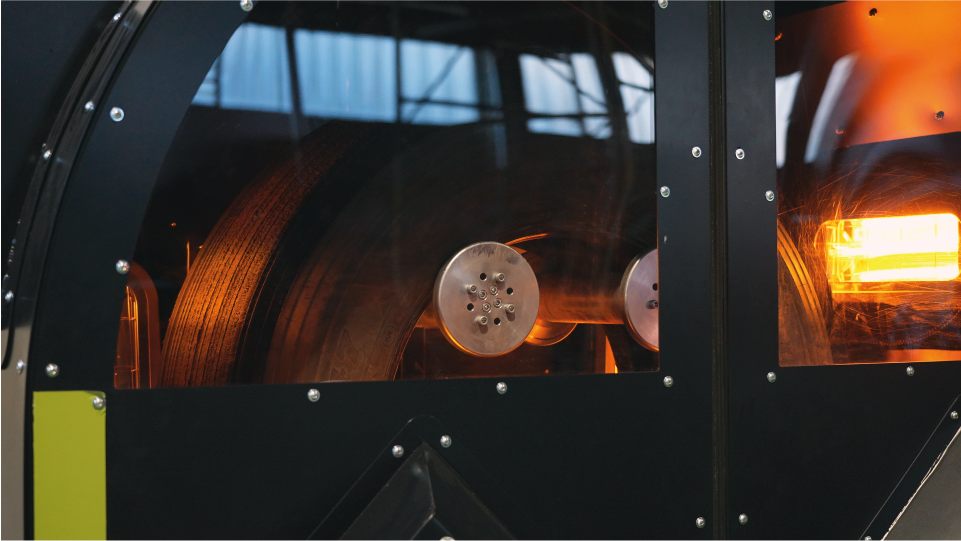
At the heart of the technology is a process of controlled devulcanization of the rubber surface.

Using a system that employs water and a high-energy jet, we are able to break the chemical bonds of sulfur on the rubber surface.

In this way, the surface temporarily returns to a reactive chemical state, allowing the new rubber to bond directly at the molecular level with the existing rubber.

It is therefore not a simple bonding process: true molecular continuity is created between the old rubber and the new rubber.

A Structural Bond

Francesco:
So is the bond between the materials different from that in traditional processes?

Engineer Silvio Mennella:
Exactly.

In traditional systems, a bond is created between two distinct materials with adhesives.

In our case, however, we obtain a single continuous elastic structure.

The test is simple: if you try to separate the two layers, they do not come apart. Instead, the entire elastic body of the tire deforms.

A fully circular process

Francesco:
From an environmental standpoint, what advantages does this technology offer?

Engineer Silvio Mennella:
The advantages are significant.

First of all, we drastically reduce waste. The amount of material removed is about 200–300 grams per tire, compared to several kilograms in traditional processes.

Furthermore:

the water used is completely filtered and reused
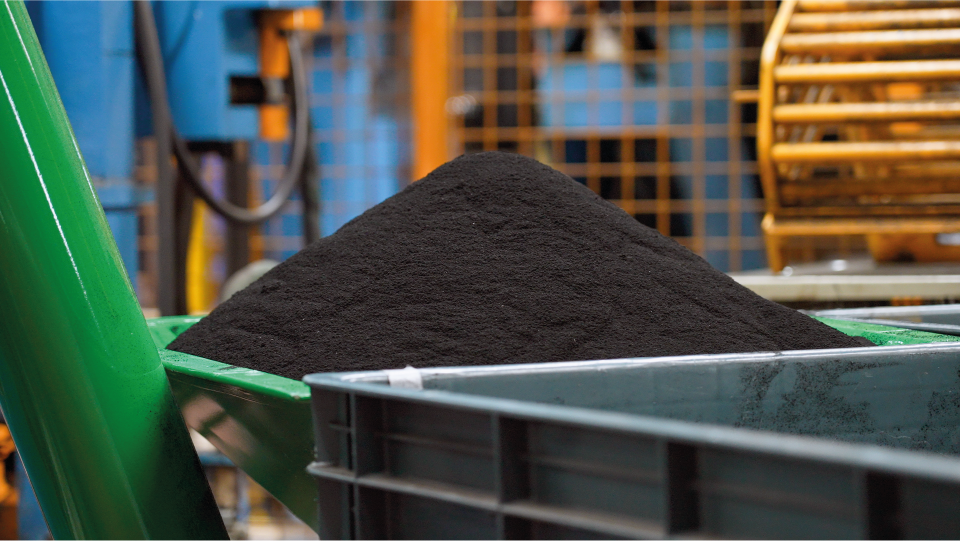
the removed material becomes devulcanized powder
this material can be reused in new compounds or in other industrial applications, such as agriculture due to its high water absorption capacity, or as an additive for the construction industry

In practice, the process generates almost zero waste.

Applications of Recovered Material

Francesco:
Can the recovered material be reused?

Engineer Silvio Mennella:
Yes. The powder we obtain is not simply rubber granules: it is devulcanized material, and therefore chemically more reactive.

It can be used:

in new tire compounds
in modified asphalt
in cement
in the leather industry, for example for leather surface treatments

The applications are numerous and offer high added value.

On-Road Performance

Francesco:
Do you already have performance data?

Engineer Silvio Mennella:
Yes, we’ve conducted comparative tests with new tires.

In some tests, we mounted a new premium tire and a regenerated tire produced using our process on the same semi-trailer.

The result was very interesting: the mileage was essentially identical.

We currently have about a thousand tires in circulation, and initial results indicate mileage exceeding 100,000 km, with even greater potential.Applications of the recovered material

Reduction in CO₂ Emissions

Francesco:
What is the environmental impact compared to a new tire?

Engineer Silvio Mennella:
A new truck tire contains about 75 kg of material.

In our case, we use only about 10–12 kg of new rubber, while the rest consists of the recovered original casing.

This means that the carbon footprint is up to eight times lower than that of manufacturing a completely new tire.

The tire casing can be reused multiple times

Francesco:
How many times can a tire casing be retreaded?

Engineer Silvio Mennella:
High-quality tire casings can be retreaded multiple times over their lifespan.

In some cases in the United States, casings have been retreaded three or four times.

This is because the press vulcanization process also helps to rebalance the internal stresses of the structure, returning the material to a more stable state. The heat relaxes the micro-gaps that form around the plies, and this rejuvenates the tire.

The Circular Economy Applied to Tires

Francesco:
What is the industrial vision behind this project?

Engineer Silvio Mennella:
The goal is to move tire retreading toward a true circular economy model.

Not only recovering the casing, but also:

reducing waste
reusing the recovered material
cutting energy consumption
drastically reducing CO₂ emissions

In this way, the tire becomes a truly regenerable product, with economic and environmental benefits for the entire transportation sector.